Acne Scar Treatment for Men in Perth – Professional Options & Results
If acne scars are affecting how you look and feel, you’re not alone. Many men in Perth deal with scarring that persists long after the breakouts have cleared. The good news is that professional acne scar treatment is more accessible, more targeted and more effective than it’s ever been.
What Are Acne Scars?
Acne scars and acne marks are not the same thing. A red or dark mark left after a pimple heals is called post-inflammatory pigmentation. It fades over time. A true acne scar is a permanent change in skin structure caused by inflammation that damaged the collagen beneath the surface.
There are several types of acne scars, and knowing which you have matters before any treatment begins.
Ice-pick scars are narrow, deep holes that go straight into the skin. Boxcar scars are wider with defined edges. Rolling scars create a wave-like texture across the skin. Raised scars, sometimes called hypertrophic or keloid scars, form when the body produces too much collagen during healing. Post-inflammatory hyperpigmentation leaves dark or red marks without changing skin texture.
A professional assessment is essential before you start any acne scar treatment. Treating the wrong scar type with the wrong method can waste time, money and skin health.
Why Acne Scar Treatment Matters for Men in Perth
Acne scarring affects far more than just appearance. For many men, it affects confidence in professional settings, in social situations and in close-up grooming. When you’re clean-shaven, under office lighting or photographed at close range, uneven skin texture is hard to ignore.
Grooming also plays a role. Shaving over pitted or uneven skin is harder, more irritating and more likely to cause ingrown hairs or razor bumps. Some men avoid certain haircuts or grooming styles because they’re self-conscious about the skin beneath. Men’s waxing and regular grooming can improve overall skin appearance, but scarring often needs targeted clinical treatment to show real change.
Perth’s strong sun is a factor too. UV exposure doesn’t cause acne scars directly, but it makes post-inflammatory marks darker and more visible, and it can affect how certain treatments perform. Sun protection isn’t optional in Perth. It’s part of any responsible treatment plan.
Men in Perth increasingly look for discreet, time-efficient care from qualified clinicians who understand male skin. That means clear appointment structures, honest timelines and clinical expertise, not just a sales pitch.
What Causes Different Types of Acne Scars?
Ice-Pick Scars
Ice-pick scars form when deep acne lesions destroy skin tissue all the way down to the dermis. The body can’t replace what was lost, so it heals with a narrow channel. These are among the hardest scars to treat because of how deep and narrow they are. Standard surface treatments rarely reach far enough.
Boxcar Scars
Boxcar scars result from inflammation that destroys collagen in a wider area, leaving a flat-bottomed depression with steep sides. They’re more common on the cheeks and temples. Shallow boxcar scars often respond well to resurfacing treatments. Deep ones may need more targeted procedures.
Rolling Scars
Rolling scars develop when fibrous tissue forms between the skin surface and deeper layers, pulling the skin inward. This creates an uneven, undulating texture. They’re often more visible in certain lighting and tend to affect larger areas of the face.
Raised Scars and Keloids
Some men produce excess collagen during healing, leading to raised, thickened scar tissue. Hypertrophic scars stay within the original wound boundary. Keloid scars grow beyond it. Both require careful clinical management, and some resurfacing treatments can make them worse. Skin type matters greatly here.
Dark Marks and Redness After Acne
Post-inflammatory hyperpigmentation and redness are not true scars, but they can look just as noticeable. These marks occur when inflammation triggers excess pigment production or leaves dilated blood vessels. In Perth’s sunny climate, these marks can deepen if the skin isn’t protected. They often respond well to targeted treatment.
How Do Clinics Assess Acne Scarring?
Skin and Scar Assessment
A thorough assessment maps the scar types across your face or body. A clinician will examine scar depth, width, texture and distribution. This determines which treatment methods are likely to be effective and what the realistic outcome looks like for your skin. Rushing this step leads to poorly matched treatments and disappointing results.
Skin Tone and Pigmentation Risk
Skin tone is a major factor in treatment selection, particularly for laser treatments. Darker skin tones carry a higher risk of post-treatment hyperpigmentation if the wrong device or energy level is used. Fitzpatrick skin typing guides safe treatment parameters. A qualified clinician will always assess this before recommending any laser or energy-based treatment for acne scar removal in Perth.
Active Acne and Ingrown Hair Checks
Treating acne scars while active acne or active inflammation is present is counterproductive. New lesions can form during recovery, creating new damage. A good clinician will check for active breakouts, cysts, ingrown hairs and general skin health before starting any acne scar treatment plan. In some cases, managing active acne comes first.
Lifestyle, Sun Exposure and Downtime
Your lifestyle shapes what’s realistic. Men who work outdoors in Perth face greater UV exposure, which affects healing and outcome. Athletes need to know when they can return to training. Professionals need honest guidance about how visible any redness or recovery will be. A thorough clinic factors all of this into a personalised treatment plan rather than offering a one-size approach.
What Are the Best Professional Acne Scar Treatments for Men?
Laser Resurfacing for Acne Scars
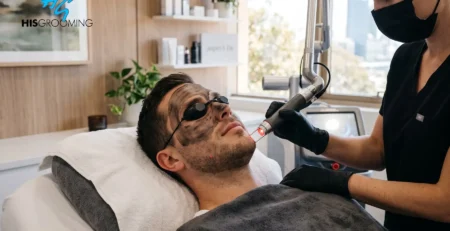
Laser resurfacing is one of the most well-studied options for atrophic acne scar treatment. Fractional laser technology delivers energy in a grid pattern across the skin, creating thousands of tiny treatment zones. The surrounding untreated skin helps accelerate healing and stimulate collagen production.
There are two main approaches: ablative and non-ablative. Ablative lasers, including fractional CO2 laser acne scar treatments, remove the outer layers of the epidermis to trigger deeper collagen regeneration. They tend to produce more significant improvements but carry more downtime and a longer recovery. Non-ablative fractional lasers work beneath the surface without removing the outer skin. They’re gentler, with less downtime, but usually require more treatment sessions.
Laser acne scar treatment in Perth carries meaningful risks for some skin types. Men with darker skin tones or a history of keloid formation need extra caution. Choosing a clinic with the right devices and a clinician with experience in diverse skin tones reduces the risk considerably. Sun protection before and after laser treatment is non-negotiable.
Microneedling for Texture and Shallow Scars
Microneedling, also called skin needling or collagen induction therapy, uses fine needles to create controlled micro-injuries in the skin. The body responds by stimulating collagen production and elastin, gradually improving texture and tone. Dermapen skin needling is a common device used in Perth clinics.
Microneedling works best for rolling scars and shallow boxcar scars. It improves overall skin texture and can reduce the appearance of acne scars across larger treatment areas. It’s generally suitable for a wider range of skin types than ablative laser and involves less downtime. Multiple sessions spaced several weeks apart are typically needed for best results, but the gradual improvement is real and measurable.
Radiofrequency Microneedling
RF microneedling Perth combines the collagen-stimulating effect of skin needling with controlled heat delivered via radiofrequency energy. The needles penetrate the dermis and release heat directly into the scar tissue, triggering deeper remodelling.
This makes it more effective for deeper scars and skin tightening than standard microneedling alone. It also tends to be safer across a broader range of skin tones because the energy is delivered below the pigment layer, reducing surface pigmentation risk. For men wanting texture improvement alongside firmer-looking skin, RF microneedling is a strong option worth discussing during consultation.
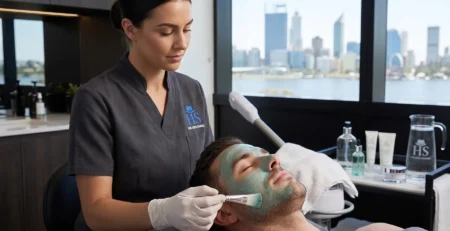
Chemical Peels for Marks and Uneven Tone
Medical-grade chemical peels remove damaged surface skin cells and stimulate regeneration. They’re particularly useful for post-inflammatory hyperpigmentation, uneven skin tone and superficial texture issues. Different peel strengths target different depths of skin.
Choosing the right peel strength is a job for a qualified clinician. Over-the-counter peel products rarely approach the strength needed to make a meaningful difference to acne scarring. A peel that’s too strong or applied incorrectly can cause burns or worsen pigmentation. Used correctly by an experienced clinician, chemical peels are a practical tool in an acne scar treatment plan.
Subcision for Tethered Rolling Scars
Subcision is a minor surgical procedure where a fine needle or blade is inserted beneath the skin to physically cut the fibrous bands that pull rolling scars downward. Once those bands are released, the skin can rise to a more even level. It’s often combined with other treatments, such as microneedling or filler, to fill the space created and maintain the improvement.
Subcision is particularly effective for rolling and tethered scars that don’t respond adequately to surface treatments alone. It directly addresses the underlying cause rather than just treating the surface.
TCA CROSS and Targeted Scar Procedures
TCA CROSS (trichloroacetic acid chemical reconstruction of skin scars) involves applying a high concentration of TCA into individual ice-pick or narrow scars. The controlled chemical injury triggers collagen production deep within the scar channel, gradually raising and smoothing the base of the scar.
It’s a targeted procedure suited to deep, narrow scars that other treatments can’t adequately reach. It may be used alongside other treatments as part of a broader acne scar revision plan.
Dermal Fillers for Depressed Scars
Dermal fillers can be injected beneath selected indented acne scars to physically raise the skin surface. This can give immediate visual improvement for deeper, well-defined depressions. Results are temporary, typically lasting several months to a couple of years depending on the product used and the individual. Fillers don’t treat the underlying scar structure but can be a useful part of a combination approach. Suitability varies by scar type and location.
How Are Treatments Matched to Different Acne Scars?
Best Options for Ice-Pick Scars
Ice-pick scars are deep and narrow, which makes them resistant to surface treatments. TCA CROSS is often considered the most targeted option because it reaches the base of the scar channel. In some cases, punch excision may be recommended to remove the scar entirely before resurfacing. Combination approaches generally produce better outcomes than a single method.
Best Options for Boxcar Scars
Shallow boxcar scars respond well to fractional laser acne scar treatment and RF microneedling, both of which stimulate collagen production and can raise the scar floor over time. Deeper boxcar scars may benefit from subcision or filler to lift the base before resurfacing. The clinician assesses depth to select the right combination.
Best Options for Rolling Scars
Rolling scars are best addressed by targeting the fibrous bands beneath the skin. Subcision is often a first-line recommendation. Once the tethering is released, collagen induction therapy using skin needling or RF microneedling helps maintain and build on that improvement. Multiple sessions are typically required.
Best Options for Raised Scars
Hypertrophic acne scars and keloids require a careful approach. Ablative resurfacing can make them worse. Options include corticosteroid injections, silicone-based treatments and, in some cases, specific laser therapies that target blood vessels rather than removing tissue. Anyone with raised scars should have a detailed assessment before any treatment begins.
Best Options for Pigmentation and Redness
Post-inflammatory hyperpigmentation and red marks often respond to targeted laser treatments, chemical peels and medical-grade skincare. In Perth’s UV environment, consistent sunscreen use is essential during and after any pigmentation treatment. Without it, marks can return or worsen regardless of the treatment used.
What Happens During an Acne Scar Treatment Plan?
Initial Consultation
Your first appointment covers your skin history, the types of acne scars present and what you’re hoping to achieve. A qualified clinician will examine your skin, assess scar type and depth, discuss your skin tone’s relevance to treatment selection and explain realistic outcomes. This is also the time to raise any medical history, medications or previous treatments. A consultation is not a sales session; it’s a clinical step.
Preparing the Skin
Before treatment begins, you may be asked to use specific skincare products for several weeks. These can include vitamin A or retinoid products to prime the skin for treatment, antiviral or antibacterial medications in some cases, and SPF products to reduce UV damage and pigmentation risk. Stopping irritating products before treatment helps reduce the chance of unexpected reactions.
The Treatment Appointment
The treatment itself varies by method. Laser treatments typically involve a numbing cream applied beforehand, followed by the device passing over the treatment zones in a controlled pattern. Microneedling and RF microneedling feel like a fine vibration or warmth. Chemical peels involve a tingling or mild burning sensation during application. Most treatments take between 30 and 90 minutes depending on the area and procedure.
Immediate Aftercare
Directly after treatment, the skin will typically look red and feel warm, similar to mild sunburn. A calming serum or moisturiser is usually applied at the clinic. You’ll receive specific product and care instructions to follow at home. Avoiding sun exposure, heat, sweating and irritating products in the first 24 to 72 hours is critical. This is not the time to improvise with your skincare.
Review and Follow-Up Sessions
Progress reviews between sessions allow the clinician to assess how the skin is healing and adjust the plan if needed. Improvement may not be obvious after one session. Reviewing before the next treatment ensures the approach is still appropriate and that the skin is responding well. Most plans involve between three and six sessions, depending on scar type and skin response.
How Many Treatments Are Needed?
There’s no fixed number. The right number of sessions depends on scar depth, skin type, the treatment method chosen and how the skin heals between appointments.
Deep, widespread or mixed scar types generally require more sessions than isolated shallow scars. Skin that heals slowly or is prone to inflammation may need longer gaps between treatments, which extends the overall plan.
Acne scar improvement is almost always gradual. The body takes time to produce new collagen after stimulation. Changes become more visible weeks after a session rather than immediately after. This is why reviewing progress at each step matters.
Most laser and microneedling plans involve between three and six sessions spaced several weeks apart. Some combination plans or deeper scarring may require more. A realistic treatment plan sets expectations honestly rather than promising rapid transformation.
What Is the Recovery Time?
Laser Recovery
Ablative fractional laser treatment typically involves the most significant downtime. Skin may feel raw, red and swollen for several days. Peeling or flaking often occurs within the first week as the treated surface renews. Most people need five to seven days before they’re comfortable in public. Non-ablative laser has less visible recovery, usually two to four days of mild redness.
Microneedling Recovery
Standard microneedling causes redness and mild swelling for 24 to 48 hours. The skin may look slightly sunburned. Most men are comfortable returning to work or normal activities within one to two days. RF microneedling involves slightly more redness and warmth, typically settling within two to four days.
Chemical Peel Recovery
Lighter peels cause minimal downtime, often just redness for a day or two. Deeper peels can cause peeling and flaking over five to seven days. The stronger the peel, the longer the skin takes to settle. Your clinician will advise based on the peel depth selected.
Returning to Work, Exercise and Grooming
Plan your return to training carefully. Sweating increases skin temperature and can irritate treated skin. Most clinicians recommend avoiding intense exercise for at least three to five days after laser or RF microneedling. Shaving over treated skin should be delayed until the skin has fully settled. Ask the clinic for specific guidance based on your procedure.
When to Contact the Clinic
Contact the clinic if you notice unexpected blistering, signs of infection such as increasing pain or pus, prolonged swelling beyond a week, or any unusual skin changes after treatment. Most clinics offer post-treatment support as part of their care standard.
How Should Men Prepare for Acne Scar Treatment?
Avoid Excessive Sun Exposure
Reduce time in direct sunlight for at least two to four weeks before treatment. Tanned or sun-damaged skin is more reactive and carries a higher risk of complications, particularly with laser treatments. If you work outdoors, use a broad-spectrum SPF 50 sunscreen daily during this period.
Pause Irritating Skin Products
Stop using retinoids, exfoliating acids and harsh active skincare products at least one week before treatment. These can sensitise the skin and increase irritation during and after the procedure. Your clinician will tell you exactly when to stop and when to restart.
Tell the Clinic About Medications and Skin Conditions
Some medications affect healing or pigmentation risk. Blood thinners, certain antibiotics and isotretinoin (Roaccutane) all have specific implications for treatment timing. Be upfront about any medical conditions, recent illnesses or changes in medication. This information is used to keep you safe.
Plan Around Training, Events and Travel
Don’t book a laser or microneedling session the week before a major sporting event, a work trip or a beach holiday. You’ll need recovery time and the ability to avoid sun exposure. Plan your treatment sessions around your lifestyle, not the other way around.
Arrive With Clean, Product-Free Skin
On the day of treatment, arrive with thoroughly clean skin. No moisturiser, SPF, aftershave or grooming products. The clinician needs to see and treat your skin directly. Residual products can interfere with the procedure and increase the risk of adverse reactions.
What Aftercare Gives the Best Results?
Use Broad-Spectrum Sunscreen Daily
This is the single most important aftercare step in Perth. UV exposure after treatment can cause the skin to produce more pigment, undoing the work done in the clinic. Use SPF 50 every morning without exception, even on overcast days. Reapply throughout the day if you’re outdoors. Sunscreen protects your results and reduces the risk of post-treatment hyperpigmentation.
Keep the Skin Calm and Hydrated
Treated skin needs moisture to heal well. A simple, fragrance-free moisturiser helps keep the barrier intact and reduces dryness or tightness. Avoid complicated multi-step routines in the first week. The goal is to support healing without adding unnecessary products.
Do Not Pick, Scratch or Exfoliate Early
It’s tempting to remove flaking or dry skin, but picking at it can cause new scarring, infection or pigmentation. Let the skin shed naturally. Avoid mechanical exfoliation, scrubs or harsh cleansing for at least one week after treatment, or until the clinician advises it’s safe.
Follow the Clinic’s Product Instructions
Your post-treatment kit matters. Use only the products recommended by your clinician in the recovery period. Introducing new products, particularly active ingredients, too soon can interfere with healing or cause unexpected reactions. If you’re unsure about a product, ask the clinic before using it.
Manage Active Acne to Prevent New Scars
If active breakouts are occurring during your treatment plan, discuss this with your clinician. Ongoing acne can create new scars, counteracting the improvement from treatment. Managing active acne through appropriate skincare or medical treatment is an important part of protecting long-term results.
Can Laser Hair Removal and Acne Scar Treatment Be Combined?
Many men pursuing acne scar treatment in Perth also want to address unwanted facial or body hair. Diode laser hair removal is one of the most effective long-term options for permanent hair reduction, and it’s commonly combined with broader skin treatment plans.
The key is timing. Laser hair removal and laser scar treatment both affect the skin, and combining them without adequate spacing can over-stimulate the tissue, increase irritation and slow healing. Most clinicians recommend separating the two treatments by at least two to four weeks. Running them on alternate weeks allows the skin to recover between sessions.
Shaving bumps and ingrown hairs are a related concern for many men. These can cause inflammation that mimics or worsens acne scarring. Treating ingrown hairs through laser hair removal can reduce chronic skin irritation and support clearer skin overall. For more on how laser vs waxing compares for long-term hair management, that’s worth reading as a companion resource.
Always discuss your full grooming plan with the clinician so they can build a schedule that doesn’t overload the skin. Don’t combine procedures without clinical advice, even if they seem unrelated.
How Much Does Acne Scar Treatment Cost in Perth?
What Determines the Price?
Several factors influence the cost of acne scar treatment in Perth. These include the type of treatment, the device or technology used, the size of the treatment area, the number of sessions required and the experience level of the clinician. Deeper or more widespread scarring typically costs more to treat because it requires more sessions or more advanced procedures.
Single Treatments Versus Treatment Packages
Many clinics offer package pricing for multiple sessions, which generally reduces the per-session cost. A single RF microneedling session might range from $300 to $700, while a course of four to six sessions may come at a reduced total. Laser resurfacing sessions can range higher depending on the device and area treated. Confirm what’s included in any package.
Consultation and Follow-Up Costs
Some clinics charge for the initial consultation separately; others absorb the cost into the first treatment. Follow-up reviews between sessions may or may not be included. Ask about this upfront so there are no surprises. For comparison, you can check how laser costs are typically structured for hair removal in Perth, which gives a useful frame of reference for understanding how treatment pricing works in this market.
Why the Cheapest Option May Not Be Best
Budget-focused choices in clinical skin treatment can come with real consequences. Underpowered devices, under-qualified operators and inadequate aftercare support all reduce results and increase risk. Complications from poorly performed treatments, including pigmentation changes, burns or worsened scarring, can cost significantly more to fix than the original treatment. Choosing a qualified, experienced clinician with the right equipment is an investment in skin safety as much as results.
How to Choose an Acne Scar Clinic in Perth
Check Clinical Qualifications and Experience
The person treating your skin should have verifiable clinical training in skin treatments, not just a basic beauty therapy qualification. Look for registered nurses, cosmetic physicians or dermal clinicians with specific experience in acne scar treatments. Ask directly about their training, the devices they use and how many scar treatments they perform regularly. Qualifications should be easy to verify.
Ask Which Device or Procedure Is Recommended
A clinician who recommends the same procedure for every patient regardless of scar type should raise questions. The recommended treatment should be matched to your specific scar types, skin tone and lifestyle. Ask why that particular option is recommended for you, what outcomes are realistic and what the plan looks like if results are slower than expected.
Review Before-and-After Results Carefully
Look for before-and-after images of real patients with similar skin tones and scar types to yours. Be cautious of heavily edited or filtered images. Consistent, genuine results across multiple patients over time are more meaningful than one standout case. Ask whether the images shown are from treatments performed at that specific clinic.
Confirm Privacy and Discreet Appointment Options
Many men prefer a discreet experience. A good clinic will offer private appointment times, minimal waiting room exposure and clear confidentiality practices. Male grooming clinics that specialise in or regularly treat male clients will understand these preferences and accommodate them as standard practice.
Ask About Downtime and Results
Be direct about your lifestyle. If you train five days a week, travel regularly or work in a customer-facing role, the clinic needs to factor that into its recommendations. Ask specifically about downtime for each treatment option and how results typically progress over the full plan. Honest answers are a good sign. Vague reassurances are not.
Check Safety, Aftercare and Emergency Support
Reputable clinics provide clear aftercare instructions, access to a clinician if something unexpected occurs and a formal process for managing complications. Ask what happens if you have an adverse reaction after a treatment. A clinic that offers genuine post-treatment care and emergency contact is operating to a higher safety standard than one that provides a product bag and a pamphlet.
What Results Should Men Expect?
Acne scar treatment can make a real, visible difference. But it’s important to understand that most treatments reduce the appearance of scars rather than removing them entirely. Complete scar removal is rarely achievable through non-surgical means, and even surgical revision has limits.
Improvement varies significantly by scar type, skin tone and the methods used. A man with shallow rolling scars and fair skin may see substantial texture improvement after three to four microneedling sessions. A man with deep ice-pick scars or complex mixed scarring may need a combination plan over six months or more to achieve meaningful change.
What clinical treatment can deliver is: smoother overall texture, reduced depth in boxcar and rolling scars, improved skin tone and reduced discolouration, and a more even surface appearance. Texture improvement and scar removal are different things, and the distinction matters when setting expectations.
Consistent sun protection throughout and after treatment supports more even-looking results. Without it, pigmentation irregularities can develop or return, even after successful treatment.
Common Mistakes to Avoid When Treating Acne Scars
Treating Active Acne and Scars the Same Way
Active acne and acne scars need different approaches. Treating scars while breakouts are still occurring can worsen inflammation and create new damage. Active acne management should come first, or run in parallel under medical guidance. Using acne treatment products on established scar tissue rarely has any effect.
Choosing a Procedure Without an Assessment
Booking a treatment because a friend recommended it or because it’s on special is not a strategy. Different scar types need different treatments. Without an assessment, there’s no way to match the treatment to the scar. Some procedures can actively worsen certain scar types if applied incorrectly.
Ignoring Sun Protection in Perth
This point is worth repeating because the consequences are real. Perth receives high UV radiation year-round. Without daily broad-spectrum SPF use during and after treatment, pigmentation can worsen, marks can deepen and the benefits of treatment can be partially or fully reversed.
Returning to Exercise or Shaving Too Soon
Exercising too soon after treatment raises skin temperature, promotes sweating and can interfere with healing. Shaving over recently treated skin carries the risk of irritation, infection and disrupted recovery. Follow the specific timeline given by your clinician rather than guessing when it’s safe to resume.
Expecting Instant Results
Collagen production and skin regeneration take time. Most patients see the main improvement from a session four to eight weeks after it was performed, not the next day. Expecting visible change immediately after treatment leads to frustration and poor decisions, including stopping a plan before it has a chance to work.
When Should You See a Professional?
If you have deep, widespread or persistent scarring that doesn’t improve with time, professional assessment is the right next step. Home skincare can support skin health and improve mild discolouration, but it cannot physically restructure scar tissue or reach the collagen layer effectively.
Men with raised, growing or painful scars should seek medical review rather than cosmetic treatment. Keloids in particular need clinical management, and some cosmetic procedures can make them significantly worse.
If scarring is affecting your confidence, your grooming routine or your day-to-day comfort, that’s reason enough to book a consultation. You don’t need to wait until scarring is severe to seek help. Earlier assessment typically means more treatment options and better outcomes.
Frequently Asked Questions
What is the best acne scar treatment for men in Perth?
There’s no single best option. The right treatment depends entirely on the types of acne scars you have, your skin tone, your lifestyle and how much downtime you can manage. Fractional laser, RF microneedling and subcision are among the most commonly recommended for atrophic scarring, but the right choice requires a clinical assessment. A reputable Perth clinic will assess your specific scars before recommending a treatment plan.
Does laser treatment remove acne scars permanently?
Laser treatment can produce long-lasting improvements, but it doesn’t literally remove scar tissue. What it does is stimulate collagen production and remodel skin texture, which reduces the depth and visibility of scars over time. Results can be durable, particularly with good sun protection and maintenance skincare. New acne breakouts can create new scars, so managing active acne is part of preserving long-term results.
Is microneedling suitable for men with facial hair?
Yes, in most cases. The clinician will work around beard lines and can treat the entire face including areas with hair growth. However, active facial hair can make it harder to reach certain areas evenly. Men are often asked to shave before microneedling appointments so the needles can make consistent contact with the skin. Discuss your beard style with the clinic beforehand.
How many acne scar treatment sessions will I need?
Most treatment plans involve between three and six sessions, spaced three to six weeks apart. Deeper or more widespread scarring may require more. The number of sessions required for optimal results depends on scar type, treatment method and how your skin responds. Your clinician will review progress between sessions and adjust the plan if needed.
Can I exercise after laser or microneedling?
Not immediately. Most clinicians recommend avoiding intense training for at least three to five days after laser or RF microneedling. Sweating and elevated skin temperature during this period can irritate the healing skin, slow recovery and increase the risk of complications. Light walking is generally fine, but hold off on anything that significantly raises your heart rate or body temperature.
How long should I wait before shaving after treatment?
This varies by procedure. After microneedling, most clinicians advise waiting at least 24 to 48 hours. After ablative laser treatment, you may need to wait five to seven days or until the skin has fully settled. Shaving over raw or sensitised skin increases the risk of irritation and infection. Ask your clinician for specific guidance based on the treatment you’ve had.
Can acne scar treatment cause darker pigmentation?
Yes, in some cases. Post-inflammatory hyperpigmentation after treatment is a known risk, particularly for people with darker skin tones or those with a history of pigmentation issues. This is why skin tone assessment matters before treatment. Choosing the right treatment type and energy settings reduces this risk significantly. Diligent sunscreen use before, during and after treatment also helps reduce the risk.
Can acne scar treatment be combined with laser hair removal?
Yes, but timing is important. Running both treatments on the same area in the same session is generally not recommended. Most clinicians suggest separating them by at least two to four weeks to allow the skin to recover between procedures. Diode laser hair removal and laser scar treatment can form part of a broader grooming plan when properly scheduled. Discuss both goals during your initial consultation.
How much does acne scar treatment cost in Perth?
Costs vary by treatment type, clinic and the scope of the plan. Single microneedling sessions typically range from $200 to $500. RF microneedling sessions can range from $300 to $700. Fractional laser sessions may be higher depending on the device and area. Most comprehensive treatment plans involve multiple sessions. Many clinics offer package pricing, which reduces the per-session cost. Always ask what’s included before committing.
How do I choose a discreet and qualified Perth skin clinic?
Look for a clinic with verified clinical qualifications, experience specifically in acne scar treatment and a transparent approach to both pricing and results. Check that they assess each patient individually rather than pushing a single procedure to everyone. Confirm they offer private appointments, clear aftercare support and access to a clinician after your treatment if something unexpected occurs. Word of mouth, verifiable before-and-after results and clear communication during the consultation are strong indicators of a quality clinic.