How Many Laser Hair Removal Sessions Per Body Area
If you’re thinking about ditching the razor for good, the first question on your mind is probably this: how many laser hair removal sessions will it actually take? The honest answer is “it depends,” but stick with me and you’ll walk away knowing exactly what to expect.
What Is Laser Hair Removal?
Laser Hair Removal uses a focused beam of light to target the pigment inside each hair follicle. That light turns to heat, and the heat damages the follicle enough to stop it producing hair.
It’s not a one-and-done deal. Hair grows in cycles, and the laser can only catch hair that’s in its active growth phase at the time of your appointment. That’s the whole reason multiple sessions are necessary in the first place.
Modern laser technologies, especially diode lasers, work well across a wide range of skin and hair types. They’re precise, they’re quick, and for most men they’re far more comfortable than people expect.
How Many Sessions Are Needed?
Here’s the number most clinics will give you: 6 to 8 sessions for the average guy. Some men get there in 6. Others, especially with coarser or denser hair, need closer to 10.
Each session, hair growth slows down a bit more. By the third or fourth treatment, most men notice a real difference in how much hair grows back, and how fast. The visible drop-off is usually the biggest motivator to keep going.
Spacing matters here too. Sessions are typically booked 4 to 8 weeks apart, timed to your hair growth cycle. Book them too close together and you’re treating hair that hasn’t entered its active phase yet, which wastes a session.
So when someone asks how many sessions for laser hair removal it really takes, the honest range is 6 to 10, with most men landing around 7 or 8. After that, the occasional touch-up keeps things smooth long-term. If you want a clearer picture of what that adds up to in dollars, our guide on Laser Cost breaks it down treatment by treatment.
Factors That Affect Session Count
No two guys are the same, and neither is their hair. A handful of factors decide whether you’re closer to 6 sessions or 10.
Hair Color and Thickness
Dark, coarse hair responds best to laser because it has the most pigment for the laser to lock onto. Fine or light hair takes longer to treat since there’s less pigment to grab. Thick, dark body hair usually means fewer sessions than fine or lighter strands.
Skin Tone and Hair Contrast
The laser works by distinguishing hair from skin, so contrast matters. Dark hair on fair skin is the easiest combination to treat. Closer skin and hair tones mean the laser works harder, which can mean a session or two more before you see the same reduction.
Treatment Area
Your back and chest usually need more sessions than your face or neck, since hair there tends to be denser. Areas with thinner skin and finer hair, like the underarms, often respond faster. The treatment area shapes your whole timeline.
Hormones and Hair Growth
Testosterone keeps hair follicles active, which is part of why men often need more sessions than women treating the same area. Hormonal hair growth doesn’t fully stop between treatments, so a few extra rounds are normal.
How to Prepare for Treatment
A bit of prep goes a long way toward getting solid results from every session.
Before Your First Session
Shave the area 24 to 48 hours before your appointment. This lets the laser target the root instead of burning through surface hair, which is more efficient and more comfortable.
Show up with clean skin, free of lotions, deodorant, or sunscreen. Your therapist will usually run a quick patch test first, especially if it’s your first visit, to check how your skin reacts. If you’ve got questions before committing, you can Book Now for a consult first.
What to Avoid
Skip waxing, plucking, or epilating in the weeks leading up to treatment. These methods pull the hair out by the root, and the laser needs that root intact to do its job.
Stay out of the sun and away from tanning beds for at least two weeks before your session. Tanned or sunburnt skin is more sensitive and raises the risk of irritation during treatment.
What Happens During Sessions?
Once you’re booked in, the actual process is simpler than most men expect.
Consultation and Patch Test
Your first visit usually starts with a quick chat about your hair type, skin tone, and what you’re hoping to achieve. A small patch test follows, just to confirm your skin handles the laser settings well before the full treatment begins.
The Treatment Process
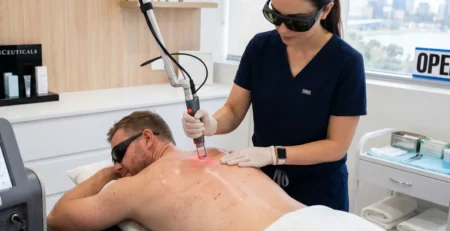
The laser passes over your skin in short pulses, each one targeting a section of hair follicles. Most men describe the sensation as a light snap, similar to a rubber band, rather than anything seriously painful. Smaller areas like the neck can take 15 minutes; larger areas like the back take closer to 45.
Aftercare Basics
Your skin might look a little red right after, similar to mild sunburn. That settles within a few hours for most people. Avoid hot showers, saunas, and heavy workouts for a day or two, and keep the area protected from direct sun.
Benefits of Multiple Sessions
Sticking with the full course of sessions is where the real payoff shows up. One session might thin things out a bit, but it won’t get you anywhere near long-term hair reduction.
Each follow-up treatment catches hairs that were dormant during the last round. By spacing sessions properly, you slowly work through every growth cycle until most follicles stop producing hair altogether.
Men who complete their full session plan typically see hair reduction in the 80 to 90% range. After the main course, occasional maintenance sessions, maybe once or twice a year, keep results steady as hormones shift slightly with age.
It’s also worth weighing this against ongoing cost. Razors, creams, and wax appointments add up fast over a few years. Our breakdown on Laser Cost walks through the real numbers.
Laser Hair Removal vs Waxing
This comparison comes up constantly, and for good reason. Both methods remove hair from the root, but they work on very different timelines.
Waxing gives you smooth skin for 3 to 6 weeks, then you’re back in the chair. It’s quick to start, with no course of treatments required, and you walk out with instant results. The tradeoff is that you’re doing this forever. Hair always comes back, and over years, the appointments and costs stack up.
Laser asks for more upfront: a series of sessions, spaced weeks apart, before you see the full payoff. Once you’ve finished that course, the hair that does grow back is finer, sparser, and far easier to manage. Many men keep waxing in the early stages of their laser journey for areas that haven’t responded yet, then drop it entirely once the laser catches up.
If you’re still shaving daily or waxing every month, our guide on Male Waxing covers what that service involves, so you can compare it directly against a laser treatment plan. For a deeper side-by-side, check out Laser vs Waxing, which lays out cost, comfort, and results over time.
There’s no universally right answer here. Guys who travel often or want zero upkeep tend to lean laser. Guys who want a quick fix before a single event often stick with wax. Most clinics offer both, so you’re not locked into one path before you’ve tried it.
How Long Results Last
Laser hair removal gives you long-term hair reduction, not permanent removal in the absolute sense. After your full course of sessions, most men see hair stay away for a year or more without any upkeep at all.
Some regrowth is normal, especially in hormone-driven areas like the chest or back. When it happens, the hair that grows back is usually finer and lighter than before, and far less noticeable.
A single maintenance session every 12 months or so is enough for most men to stay on top of any regrowth. It’s a small commitment compared to the years of shaving and waxing that came before it.
Common Myths
A lot of bad information floats around about laser treatment, so let’s clear a few things up.
Myth: One session removes all your hair. Hair grows in cycles, so only a portion is active at any time. Multiple sessions are necessary to catch every follicle.
Myth: Laser hair removal hurts a lot. Most men compare it to a light flick or snap, and modern lasers include cooling features that keep things comfortable.
Myth: It doesn’t work on darker skin. Older lasers struggled here, but modern diode lasers safely treat a much wider range of skin tones.
Myth: Results are 100% permanent. Laser gives you long-term hair reduction, but most men still benefit from an occasional maintenance session down the line.
Frequently Asked Questions
How many sessions are needed for the face?
Facial hair, especially in the beard area, tends to be hormone-driven and persistent. Most men need 8 to 10 sessions for solid, lasting reduction in this area.
How many sessions are needed for the chest or back?
These areas usually require 6 to 8 sessions. Hair here tends to be denser, so a few extra rounds often make the difference between partial and significant reduction.
Does laser hair removal hurt?
It’s generally well tolerated. Expect a quick warm snap with each pulse rather than ongoing pain, and most men say it’s far less uncomfortable than waxing.
How often should sessions be spaced?
Every 4 to 8 weeks is standard, timed around your natural hair growth cycle so each session targets fresh active hairs.
Why do some hairs grow back?
Hormones, particularly testosterone, keep some follicles producing hair even after multiple treatments. This is why maintenance sessions exist, not because the laser failed.
Is laser hair removal permanent?
It provides long-term hair reduction rather than complete permanent removal. Most men keep results steady for a year or more between occasional touch-ups.
Can men get laser hair removal on sensitive areas?
Yes. Clinics regularly treat sensitive areas with adjusted laser settings for comfort and safety. A private, professional setting makes a real difference here.
How soon will I see results?
Most men notice thinner, slower regrowth after their second or third session. Visible, significant reduction usually shows up by session four or five.
If you’re ready to get a clearer picture of your own treatment plan, Book Now for a consultation and we’ll walk you through exactly what to expect for your hair type, skin tone, and treatment area.